

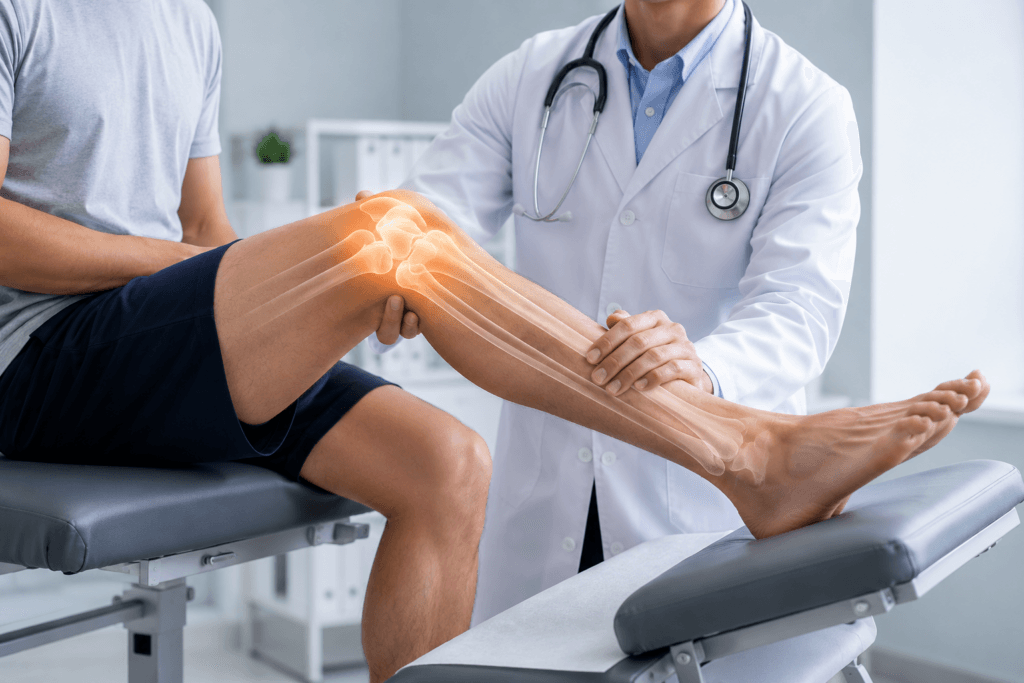
KNEE PAIN RELIEF
Knee pain can make simple daily activities such as walking, climbing stairs, standing up or exercising difficult. It may develop suddenly after an injury or appear gradually because of overuse, ageing, muscle weakness or an underlying joint condition.
The knee contains bones, cartilage, ligaments, tendons, muscles and joint fluid. Damage or irritation involving any of these structures may cause pain, stiffness, swelling or difficulty moving. Knee problems can affect people of different ages and activity levels.
Although mild knee discomfort may sometimes improve with activity modification and appropriate home care, persistent, severe or unexplained pain should be evaluated by a qualified healthcare professional.
What are the common causes of knee pain?
Knee pain is a symptom rather than a single medical condition. Its cause may depend on a person’s age, activity level, recent injuries and general health.
1. Overuse and repetitive strain
Repeated running, jumping, climbing stairs, squatting or prolonged physical activity may place additional stress on the muscles, tendons and tissues around the knee.
Overuse-related discomfort may develop gradually rather than immediately after a single injury. It is often noticed during or after physical activity.
2. Muscle weakness or imbalance
The muscles around the thigh, hip and knee help support and control the joint. When these muscles are weak or poorly coordinated, some movements may place greater stress on the knee.
A physiotherapist may recommend a personalised strengthening and mobility programme after assessing the cause of the symptoms.
3. Sprains and sports injuries
Sudden twisting, falling, changing direction or receiving a direct impact can injure the knee’s ligaments, cartilage or tendons. Possible injuries include ligament sprains, meniscus injuries and kneecap irritation.
Symptoms following an injury may include:
- Sudden pain
- Swelling
- Difficulty bearing weight
- A feeling that the knee is unstable
- Limited movement
- Locking or giving way
These symptoms require proper assessment, particularly when walking or straightening the knee becomes difficult.
4. Knee osteoarthritis
Osteoarthritis is a joint condition that can cause pain, swelling, stiffness and reduced movement. It affects the whole joint and commonly occurs in the knees, hips, hands and spine. Previous joint injuries, ageing, repetitive stress and excess body weight may increase risk.
People with knee osteoarthritis may notice:
- Pain during walking or climbing stairs
- Stiffness after inactivity
- Reduced flexibility
- Mild swelling
- Grinding or creaking sensations
- Difficulty getting up from a chair
Not every case of knee pain is caused by arthritis, so self-diagnosis should be avoided.
5. Inflammatory joint conditions
Conditions such as rheumatoid arthritis can cause joint pain, warmth, swelling and stiffness. Rheumatoid arthritis may affect multiple joints and requires medical diagnosis and management.
6. Infection or other medical conditions
A hot, red and swollen knee accompanied by fever or feeling unwell may indicate an infection. This requires urgent medical assessment rather than routine home treatment.
What can you do for mild knee pain relief at home?
Home care may be appropriate for mild discomfort without severe injury, major swelling, deformity or other warning signs.
Reduce aggravating activities
Temporarily reduce activities that clearly worsen the pain, such as:
- Running
- Jumping
- Deep squatting
- Repeated stair climbing
- Heavy lifting
- Prolonged kneeling
Complete inactivity is not always necessary. The aim is to avoid repeatedly irritating the knee while maintaining comfortable movement where appropriate.
Use a cold pack carefully
A cold pack wrapped in a towel may provide temporary comfort after a minor injury or during swelling. It should not be placed directly against bare skin.
People with reduced sensation, circulation problems or certain medical conditions should seek professional guidance before using heat or cold therapy.
Avoid forcing painful movement
Movement and exercise should not produce sharp or increasing pain. NHS exercise guidance advises stopping an exercise and obtaining medical advice when it causes pain.
Speak to a professional about medication
Pain-relief medicines may not be suitable for everyone. Existing health conditions, allergies and other medicines can affect what is safe.
A doctor or pharmacist should be consulted before using medication, especially for ongoing pain.
Can exercise help with knee pain?
Appropriate exercise is often an important part of managing conditions such as knee osteoarthritis. Exercise may help improve strength, flexibility, endurance and joint function when it is matched to the person’s needs.
NICE recommends tailored therapeutic exercise for people with osteoarthritis, including local muscle strengthening and general aerobic fitness. Supervised exercise may also be considered.
Examples that may be included in a professionally designed programme are:
- Gentle knee bending and straightening
- Thigh-muscle strengthening
- Supported leg raises
- Hip-strengthening exercises
- Low-impact walking
- Stationary cycling
- Water-based exercise
- Flexibility and balance work
The correct exercise depends on the cause of the pain. Exercises suitable for gradual osteoarthritis-related discomfort may not be suitable immediately after a ligament, cartilage or fracture-related injury.
Consult a doctor or physiotherapist before beginning exercises when:
- The injury happened recently
- The knee is significantly swollen
- Walking is difficult
- The knee locks or gives way
- Pain is severe or worsening
- Surgery has recently been performed
- The cause of the pain is uncertain
Does weight management affect knee pain?
For people with osteoarthritis who are living with overweight or obesity, weight management may help reduce stress on weight-bearing joints and improve pain and function.
NICE recommends offering weight-management support and notes that weight loss can improve physical function and quality of life for people with osteoarthritis who are above a healthy weight.
Weight loss is not required or appropriate for everyone. Advice should be personalised and should avoid extreme dieting or unsafe exercise.
How is knee pain diagnosed?
A healthcare professional may ask questions about:
- When the pain started
- Whether there was an injury
- Which movements make it worse
- Whether swelling is present
- Whether the knee locks or gives way
- Previous joint problems
- Medicines and medical conditions
- Work, exercise and sporting activities
The knee may then be examined for tenderness, swelling, movement, strength and stability.
Depending on the suspected cause, the clinician may recommend tests such as an X-ray, scan, blood test or joint-fluid analysis. Tests are not necessary for every type of knee pain.
What treatments may be recommended?
Treatment depends on the underlying cause rather than the symptom alone.
A personalised plan may include:
- Activity modification
- Physiotherapy
- Strengthening and mobility exercises
- Weight-management support where appropriate
- Medicines recommended by a doctor
- Braces or walking support in selected cases
- Treatment of an inflammatory condition
- Injections in selected patients
- Surgery for certain serious injuries or advanced joint damage
Patients should not stop prescribed medicines or replace medical treatment with a home device without consulting their healthcare professional.
What is the role of cold laser therapy?
Cold laser therapy, also known as low-level laser therapy or photobiomodulation, uses non-ionising light and may be considered as an additional pain-management option in selected situations.
Photobiomodulation devices are generally intended as adjunctive treatments, meaning they may be used alongside rather than automatically replacing diagnosis, exercise, physiotherapy or other medical care. Outcomes can vary according to the condition, device and treatment protocol.
People considering a home-use device should:
- Read the product instructions carefully
- Follow the recommended treatment duration
- Observe all eye-safety warnings
- Avoid treating unexplained symptoms without diagnosis
- Ask a healthcare professional whether it is suitable
- Stop using it if unexpected pain or irritation occurs
For more information, read our guide:
[Cold Laser Therapy for Pain Relief: A Non-Invasive Way to Support Recovery]
Yahan apne existing cold-laser blog ka internal link laga dena.
When should you consult a doctor?
Arrange a medical assessment when:
- Pain continues or repeatedly returns
- Swelling does not improve
- Everyday movement is becoming difficult
- Symptoms interfere with sleep
- The knee repeatedly gives way
- There is ongoing stiffness
- Pain began after an injury
- You are unsure about the cause
- Home care has not helped
Early assessment can help identify whether the problem is related to overuse, arthritis, soft-tissue injury or another condition.
When is urgent medical attention required?
Seek urgent medical assistance when:
- You cannot bear weight on the affected leg
- The knee is severely painful
- The knee is badly swollen or visibly deformed
- The knee is locked and cannot move normally
- The knee repeatedly gives way after an injury
- There is redness, warmth and fever
- There is numbness or sudden weakness
- The pain began after a serious fall or accident
Severe pain, inability to move the knee, major swelling or fever with a hot and red joint may require urgent assessment.
Can knee pain be prevented?
Not every knee condition is preventable, but certain habits may reduce avoidable strain:
- Increase exercise intensity gradually
- Wear suitable footwear
- Warm up before demanding activity
- Strengthen the legs and hips
- Avoid repeatedly training through pain
- Use correct lifting and exercise technique
- Allow adequate recovery
- Maintain a weight appropriate for your health
- Seek early advice for recurring symptoms
The goal should be to build strength and activity gradually rather than avoiding movement completely.
Conclusion
Knee pain can result from overuse, injury, muscle weakness, osteoarthritis or another underlying condition. Mild discomfort may sometimes improve with activity modification and appropriate home care, but persistent or severe symptoms need professional evaluation.
Exercise, physiotherapy and lifestyle changes may play an important role in long-term knee health. Additional options such as cold laser therapy may support pain management in selected situations, but they should form part of a complete and appropriately guided treatment plan.
Explore B-Sure’s pain-relief solutions and consult a qualified healthcare professional to understand which approach may be suitable for your needs.
Medical disclaimer
This article is provided for general educational and awareness purposes only. It is not a substitute for medical diagnosis, personalised treatment or emergency care. Consult a qualified doctor or physiotherapist for persistent, severe or unexplained knee pain.